Farm Tours 2026
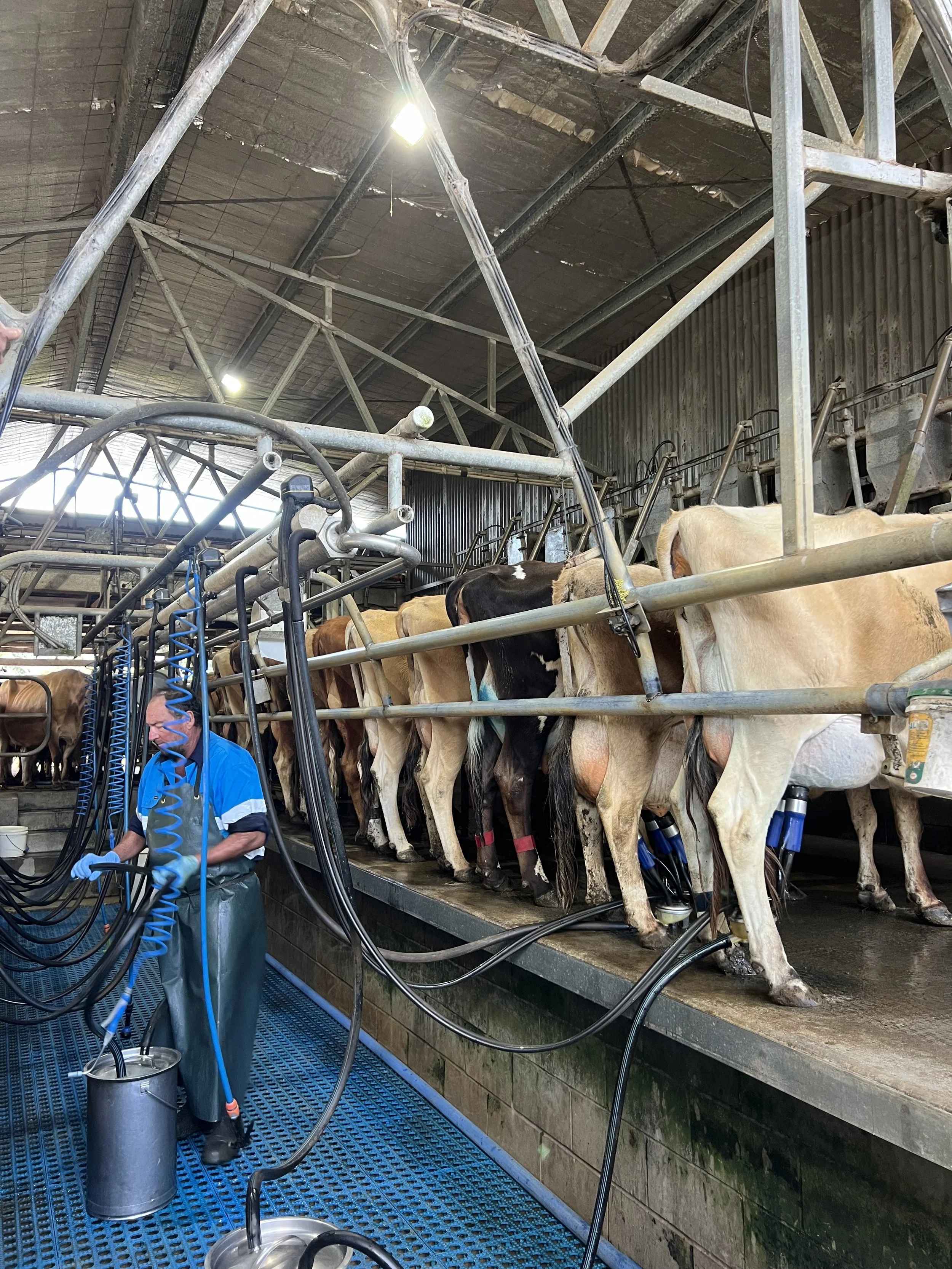
Milking the girls
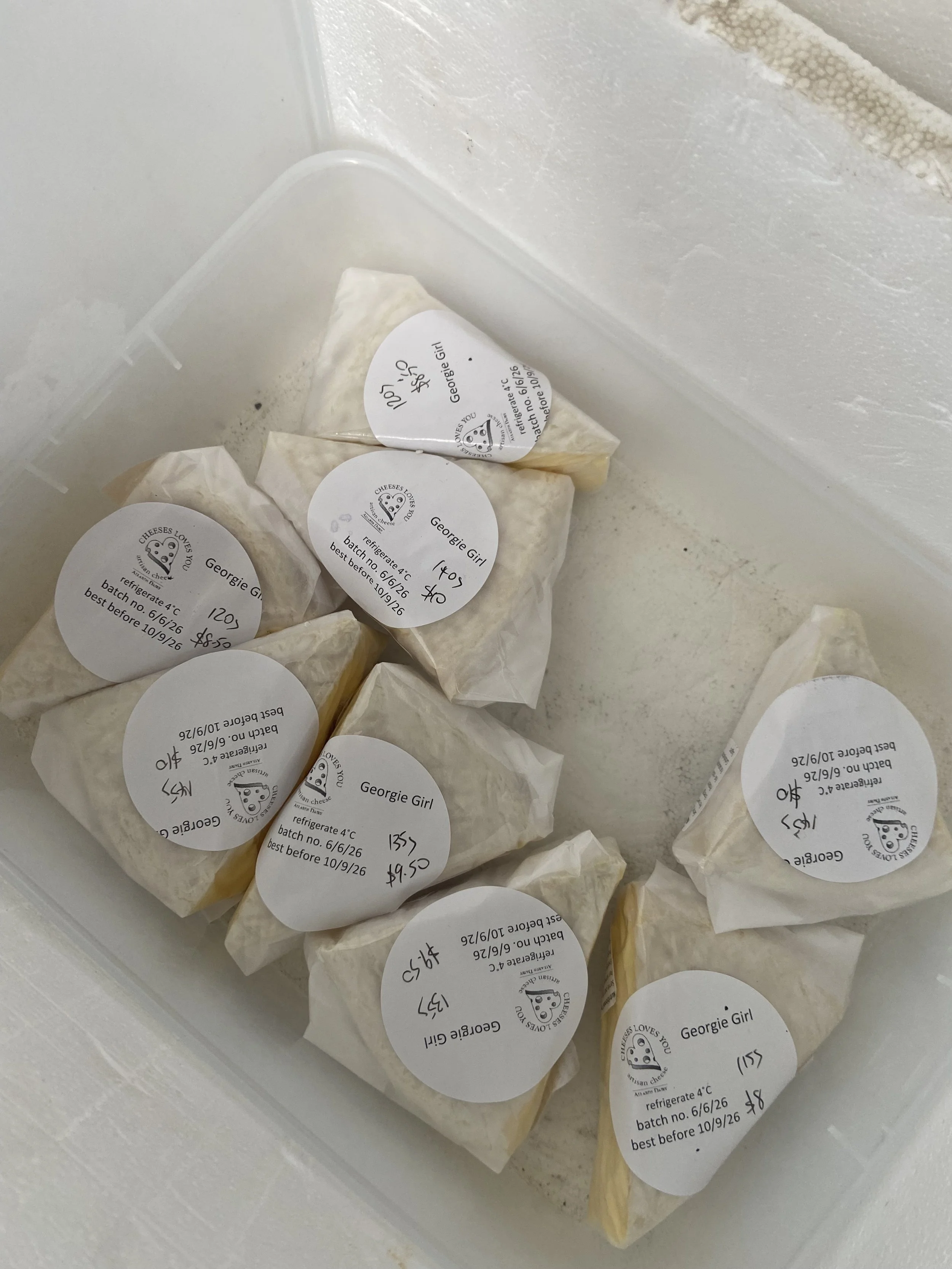
Deb’s cheese she makes and sells at the Farmers Markets
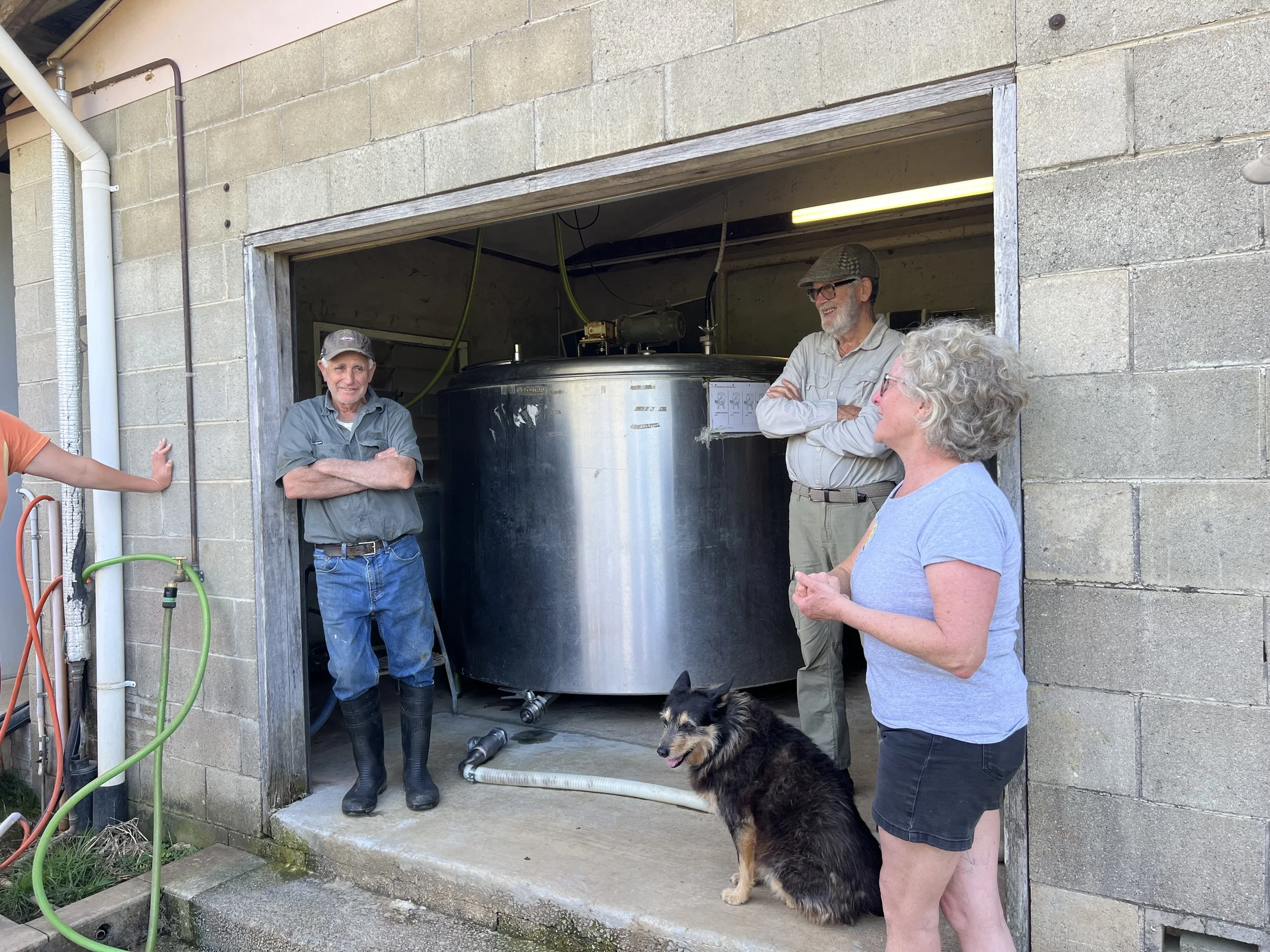
Jim + Deb explaining the Norco relationship
Deb Allards Dairy, Upper Burringbar, NSW
Farm Tour at the Allards Dairy @debra_allard_cheesie
We were lucky enough to spend some time on the farm, learning more about the journey from pasture to dairy product and the many layers of work involved in running a small-scale dairy.
The farm is home to a herd of Jersey cows, whose milk forms the foundation of both the farm’s cheesemaking and their supply to Norco. Seeing the cows out on pasture, the milking process and the infrastructure required to care for the herd offered a valuable insight into the daily rhythms and responsibilities of dairy farming.
A portion of the farm’s milk makes its way into the cheesemaking process, where it is transformed into a range of handcrafted cheeses. It was particularly interesting to see how cheesemaking brings together the qualities of the milk, the seasonal conditions and the skill of the cheesemaker: turning a raw agricultural product into something with its own distinct character, flavour and story.
The farm tour was a great reminder that food production is deeply connected to place. Behind every bottle of milk or piece of cheese is a landscape, a herd of animals, a farmer and cheesemaker, and countless hours of care and work. Supporting local dairy producers means supporting these interconnected food systems and the people who keep them alive.
Marlivale Farms
Mac from @marlivalefarm gave us a great farm tour for farmers
The family run farm by Andrea, Frank, Sophie, Mac and Wilbur the dog, two of five generations of farmers living and working from the Marlivale homestead on Widjabul Wia-bal country. Formerly known as Nimbin Valley Pecans and Rice, they have transformed what was once a dairy farm into an expanse of pecan orchards and stretches of rice fields. Restoring a biologically rich landscape and employing a soil-first approach, been proudly feeding the community seasonally grown premium pecans and dryland rice since Frank & Andrea’s take over in 1988.
The pecans are harvested, processed, roasted, and packed every product on site. This keeps food mileage to a minimum, maintains quality control over the product, and keeps us connected to our crops we so lovingly grow. From soil to stall, we’re with our pecans every step of the way
The rice is grown in rain-fed fields, rather than rice paddies, and is prepared and seeded similarly to wheat making it a hardy, durable crop provided the right circumstances present themselves. The drought conditions throughout the recent years have impacted production and seen a decrease in our offering, but when the rainfall is high so is our output (and our spirits!). Kyema, a long-grain jasmine variety, and Tachiminori a medium grain rice is they grow at Marlivale.
Go check them out at the Farmers Markets - Byron, mullumbimby, Bangalow or check out the website!
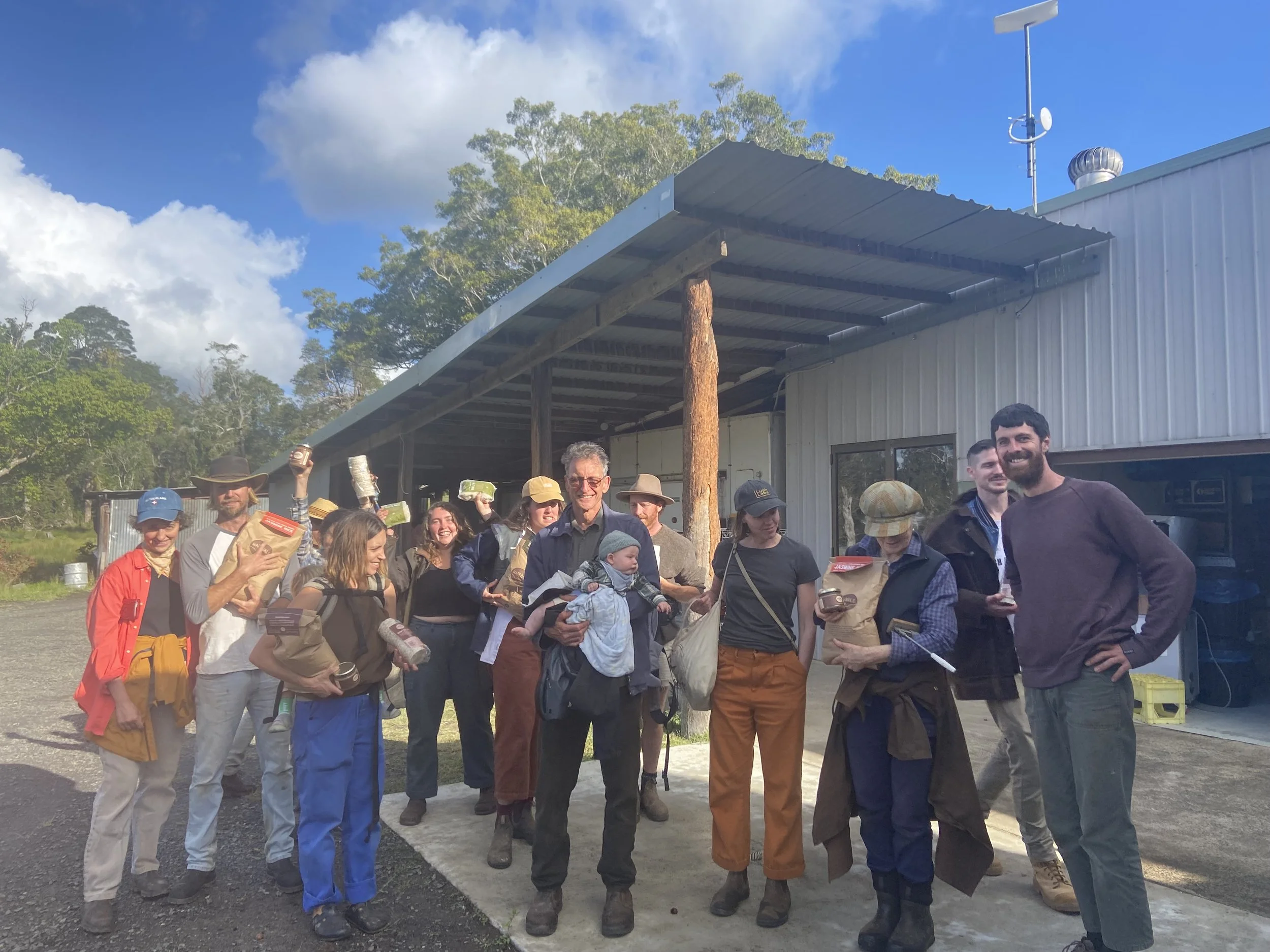
Happy customers at Marlivale Farm
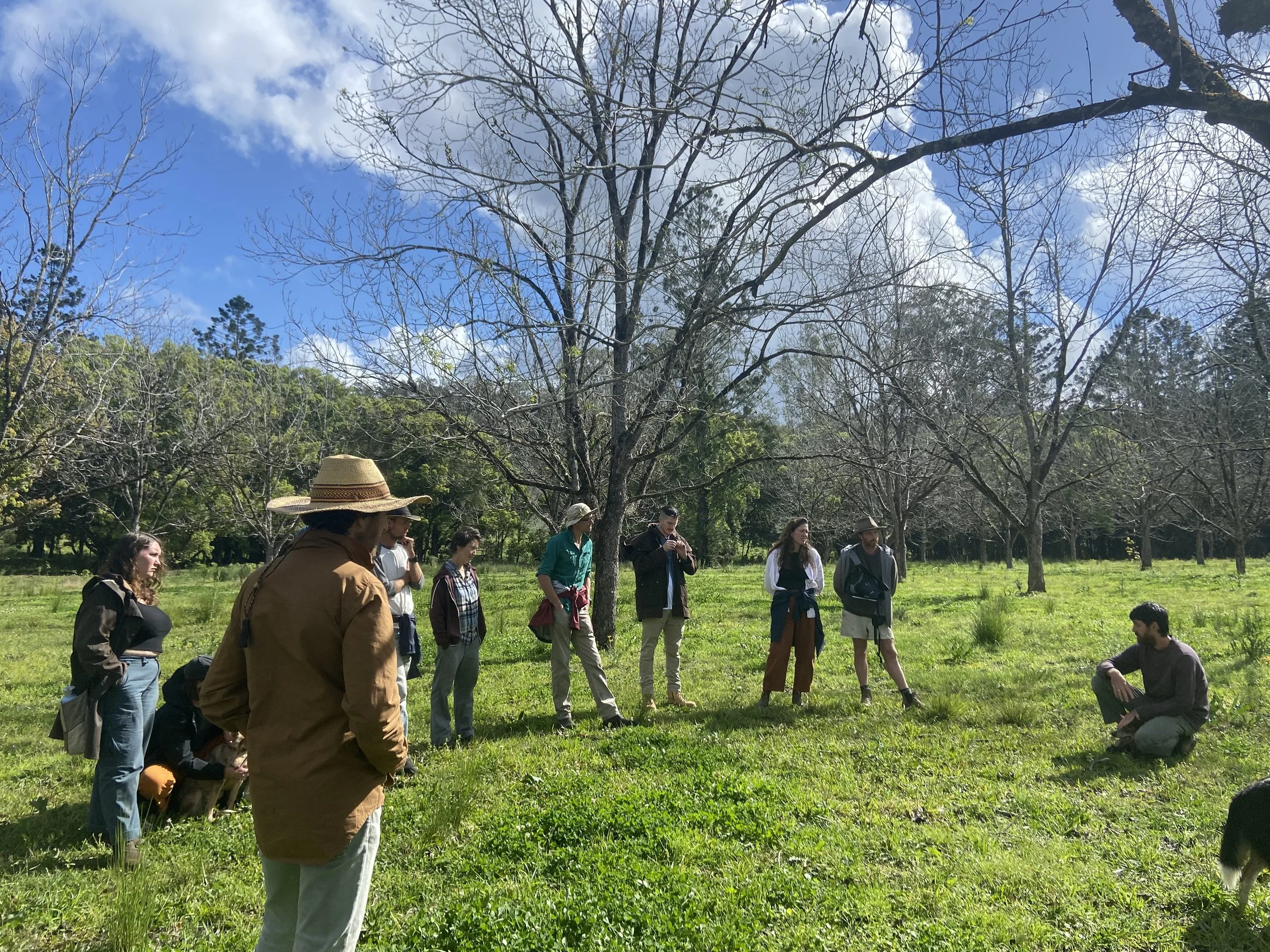
In the peacans
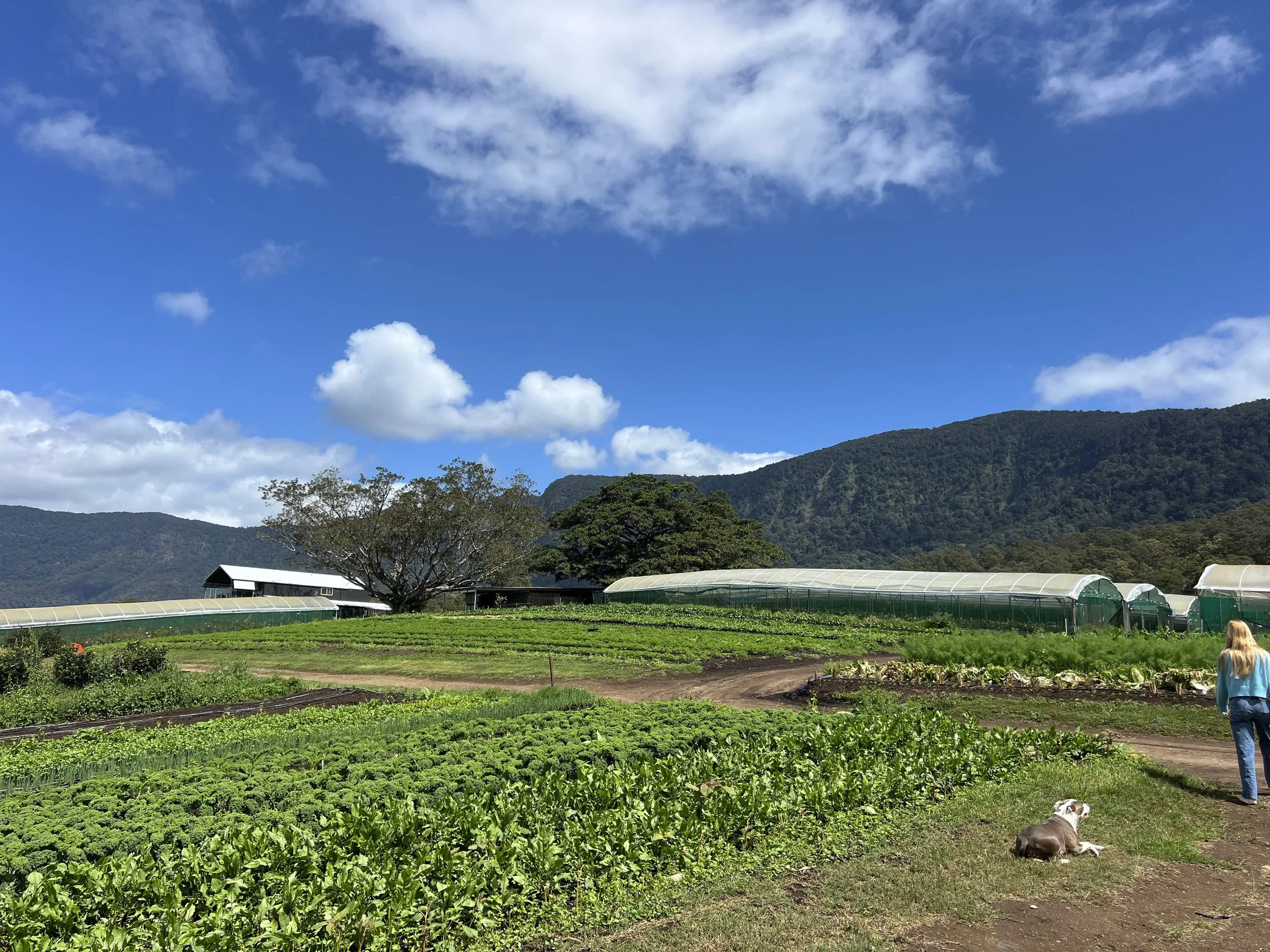
Summits production
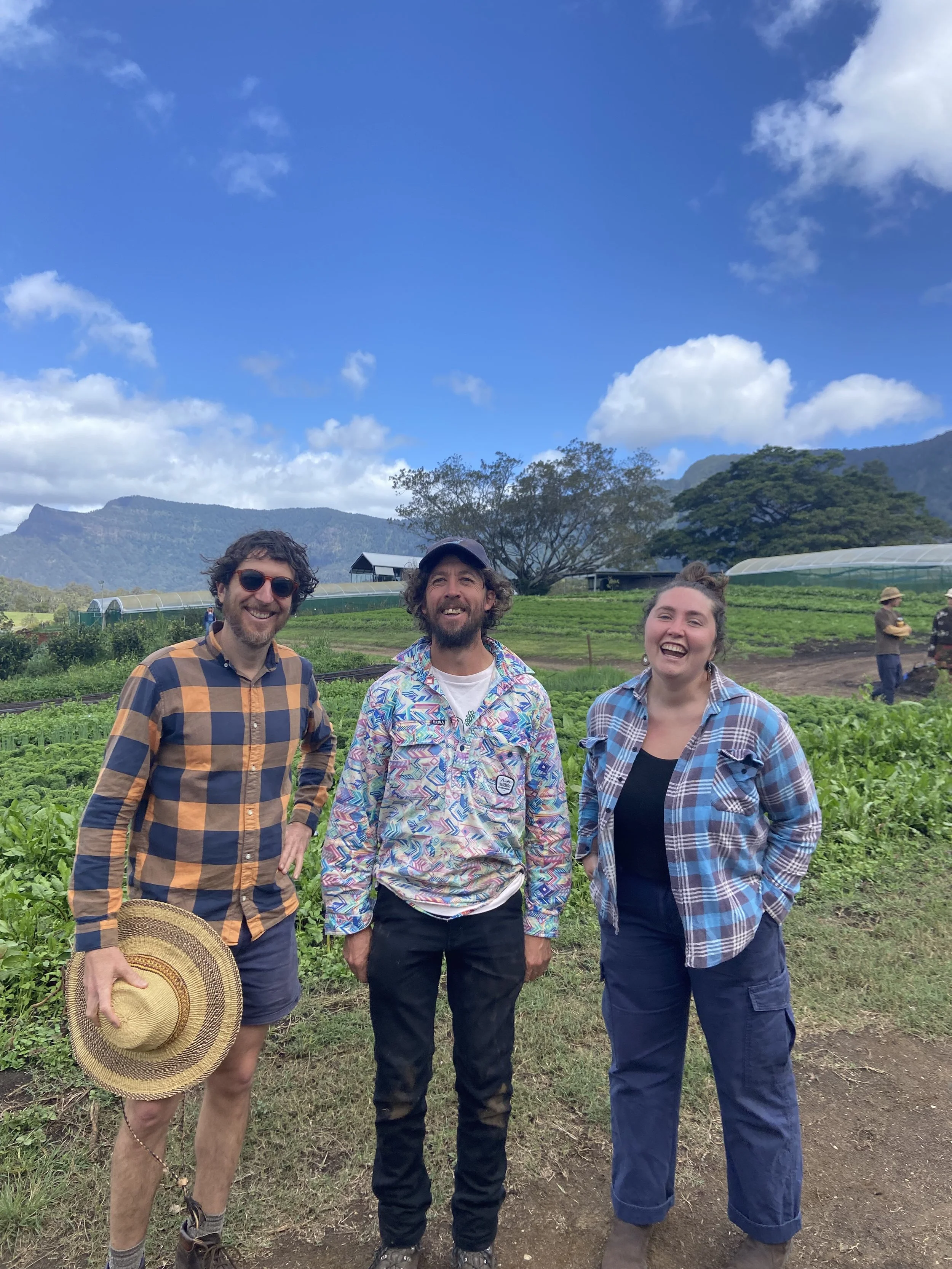
Friends
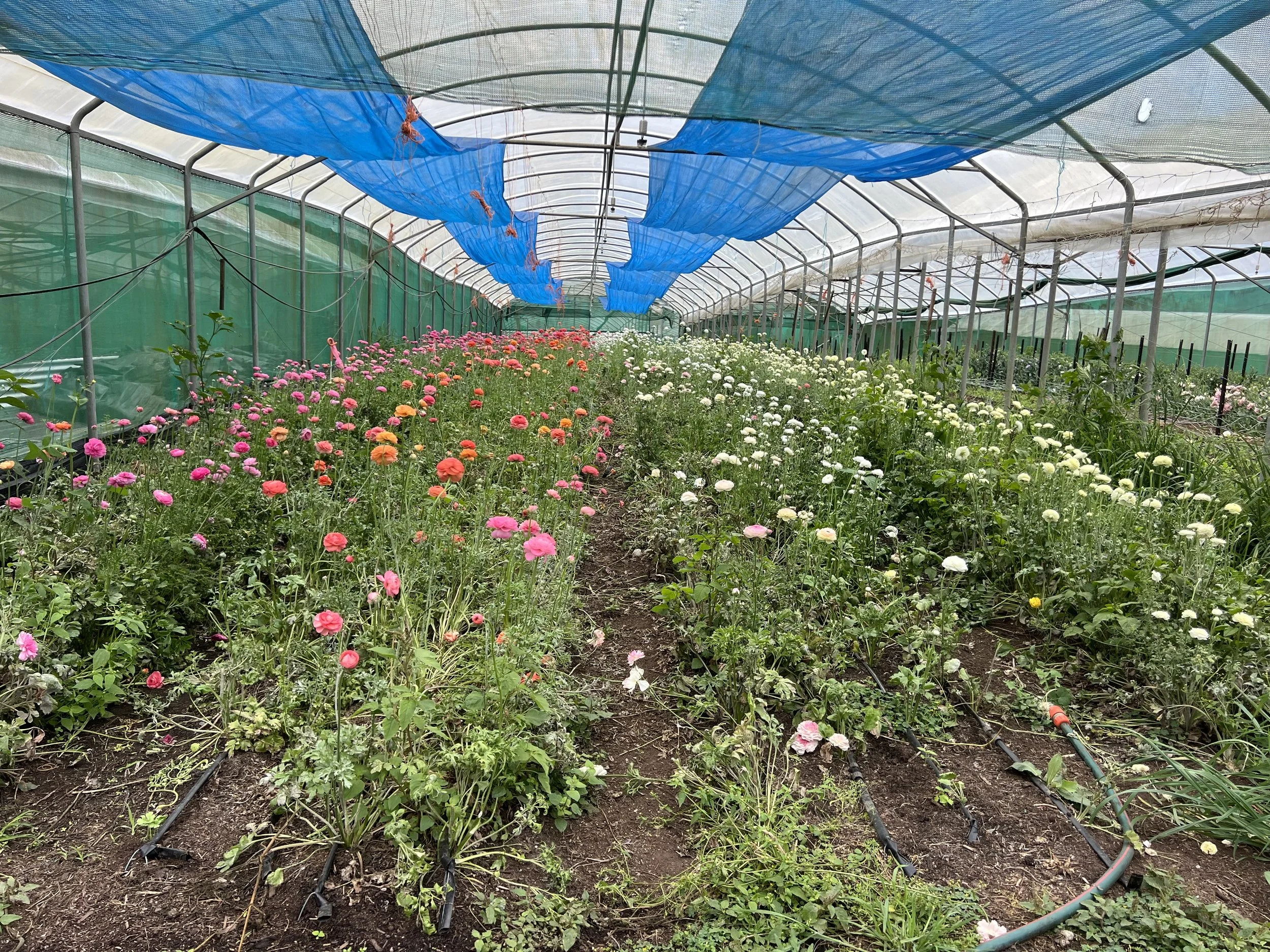
Tunnel growing seasonal flowers
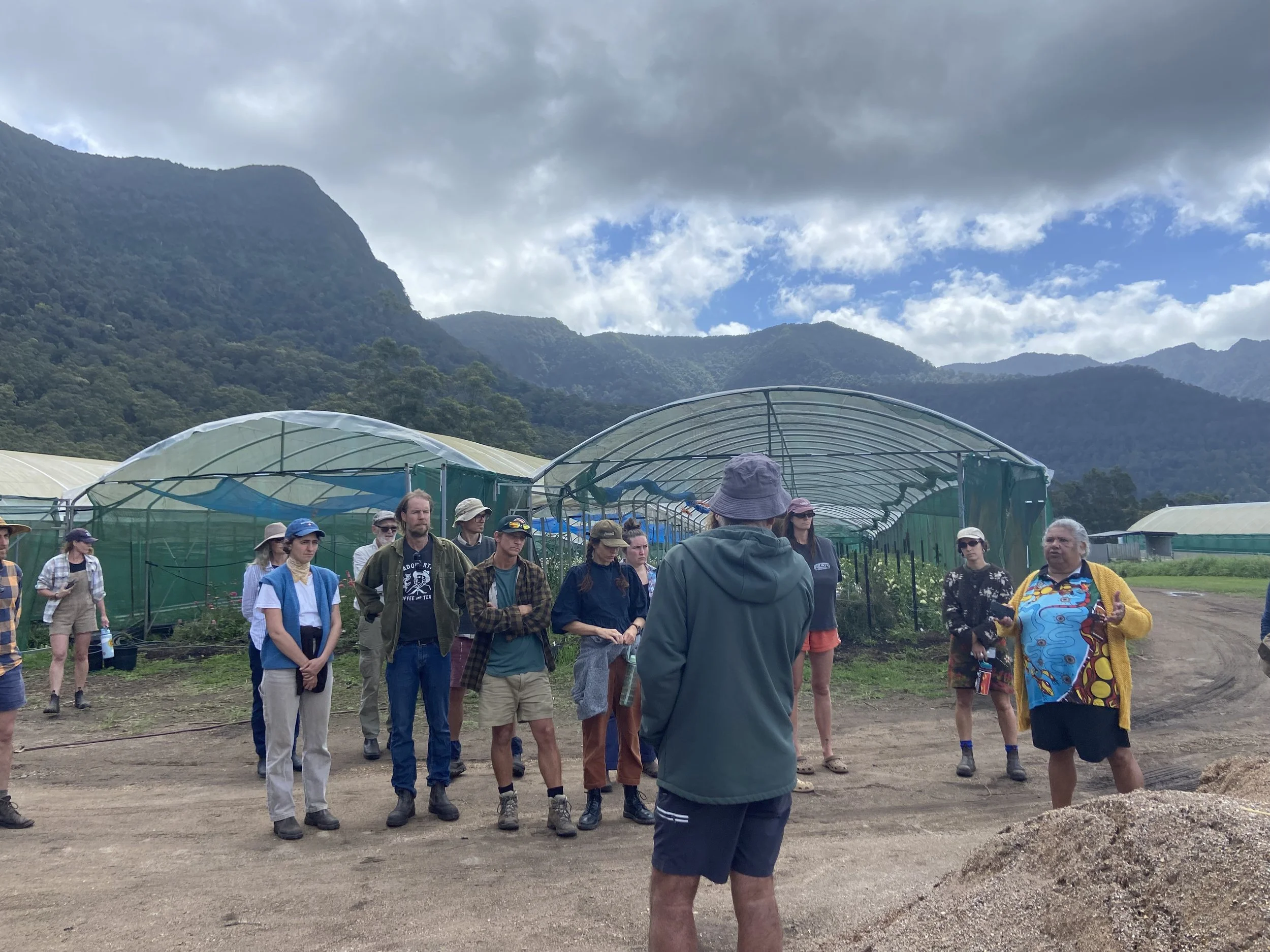
Rod explaining the Summit Organic systems
Summit Organics, Tyalgum, NSW
We were lucky enough to spend a morning walking the farm at Summit Organics. We learned more about the journey from seed to harvest, and about the planning, infrastructure and care it takes to run a diverse market garden at this scale.
Owned by Rod and Tania Bruin, the farm sits about thirty kilometres west of Murwillumbah, near the village of Tyalgum. It began as Summit Coffee Plantations, which produced the first certified organic coffee grown and processed in Australia. The Bruins later turned to vegetables, starting with sweet potatoes at the Lismore Organic Market and slowly building up their range. Today about 2.5 hectares of the 128-hectare property is intensive market garden. It grows more than fifty vegetable and herb crops a year, is certified organic, and is guided by a simple philosophy: healthy soil, healthy plants, healthy people and a healthier planet.
The tour began in the propagation house, where benches of seedling trays at every stage of growth showed where each crop starts out. Seeing the systems in place for raising healthy transplants gave a real sense of how much of a farm's success is decided before anything goes into the ground.
From there we moved through the tunnels, which hold a mix of crops: thick rows of basil, strawberries grown on plastic-mulched beds, and a flower tunnel of ranunculus and other blooms trellised under shade cloth. Out in the field, long beds of kale, silverbeet, rainbow chard and alliums ran on drip irrigation beneath the escarpment. We also spent time at the compost heap talking about soil and inputs, and visited the microgreens room, where racks of trays under lights showed how productive a small, controlled space can be.
The farm tour was a great reminder that growing food is deeply connected to place. Behind every bunch of greens or punnet of strawberries is a landscape, a team of growers, and countless hours of planning, observation and work. Supporting local organic growers means supporting these food systems and the people who keep them going.